
The performance of the auto component industry was impacted by moderation of vehicle sales in India in 2011-12.

The 17 rare earth elements that are at the centre of the current crisis are critical components of everyday products -- from cars to jet engines to electronics like smartphones and flat-screen TVs.

Maruti Suzuki India (MSIL) said on Thursday its operations are unaffected by the global rare earth magnet shortage, but added that the situation is "uncertain and evolving". The firm said it is exploring multiple solutions to maintain continuity in operations and will notify stakeholders in case of material impact.
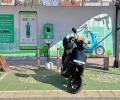
Electric two-wheeler (e2W) companies are upset with some of their suppliers of heavy rare-earth magnet-powered electric motors, who have objected to their proposal - under consideration by the government - that would allow e2W original equipment manufacturers (OEMs) an exemption from localisation norms on electric motors, thereby enabling them to continue receiving the 5,000-per-vehicle subsidy.V
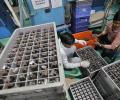
Auto component makers in India are bracing for a tough time. High absenteeism among workers owing to Covid-19, shortages of critical parts, and temporary closures of plants by automobile manufacturers have thrown a spanner in the works for the Rs 3.2-trillion sector, which derives 60 per cent of its revenues from automobile original equipment manufacturers (OEMs), with the balance split equally between replacement demand and exports. Car market leader Maruti Suzuki India on Saturday said it was extending the maintenance shutdown, which was from May 1 to 9, till May 16, "keeping in view the current pandemic situation". Some activities will continue in the plants.
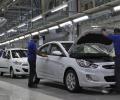
The government has decided to extend the Rs 25,938-crore production-linked incentive scheme for the automotive sector by one year, Union Heavy Industries Minister Mahendra Nath Pandey said on Tuesday. Post extension, the five-year scheme, originally in place from 2022-23 to 2026-27, will be active until 2027-28. At present, incentives are applicable under the scheme for determined sales of Advanced Automotive Technology (AAT) products (vehicles and components) manufactured in India from 1 April 2022 onwards for a period of five consecutive years.

The average car price in India has increased rapidly in the last 5-6 years due to new emission regulations and demand for more spacious and comfortable cars loaded with advanced technology.

The stock of automotive (auto) components major Bharat Forge has risen 14.6 per cent over the past month. Despite ongoing demand challenges, strong operating performance in the July-September quarter (Q3) of 2025-26 (FY26), a diversified revenue base, and expectations of a gradual recovery have lifted sentiment.
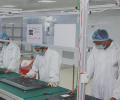
Dixon Technologies has received approval from the Indian government to form a joint venture (JV) with Chinese peer Longcheer, according to a regulatory filing. The JV will be formed between Dixon and Longcheer's Singapore-based subsidiary.

'There is a need for a national task force with a singular objective to increase automotive exports.'

Over 60 companies are ready to launch IPOs in the coming months.
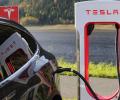
In 2024 alone, South India saw the highest rise in sales in the luxury segment, with Tamil Nadu reportedly registering a 19.3 per cent increase in premium car registrations from 2022-23

'In the long run, India's strong growth story and reforms to make assets globally attractive will determine the rupee's resilience.'
The government plans to establish a fully indigenous manufacturing ecosystem with an annual production capacity of up to 6,000 tonnes. The scheme is expected to run for seven years, according to official documents.

Traversing from being just vehicle manufacturers to mobility solutions providers amid a raging debate over which eco-friendly technology must be incentivised, the Indian automobile industry is driving in the new year under the shadow of a slowdown in sales with the post-pandemic pent-up demand in distant memory. The shift in the auto industry -- where advanced technologies like autonomous driving, vehicle intelligence, connected features and electrification are quickly gaining traction -- will be reflected in the upcoming Bharat Mobility Global Expo in which India's flagship Auto Expo has been clubbed to be held from January 17-22, 2025 in Delhi-NCR.

Tata Motors is hoping to beat its target year of 2030 and have 30 per cent of its portfolio comprising electric vehicles (EVs), according to Chairman N Chandrasekaran, who was speaking at the company's last annual general meeting (AGM) ahead if its demerger.
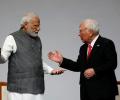
Osamu Suzuki, the man who took a risk and bet on India when no one else believed in having a viable automobile company in the country, has died at the age of 94, according to information shared by Japan's Suzuki Motor Corporation on Friday.

The institutional portion was subscribed 143 times, the wealthy investor portion by 360 times and the retail investor portion by 24.5 times.

'The delay is high in India, and even higher in the case of electric vehicles.'

Bharat Forge, the Pune-based automotive component maker, has been one of the top-performing companies in its segment. The company's stock price is up 39.3 per cent since the beginning of the 2023 calendar year, surpassing other leading automotive component makers such as Bosch and Samvardhana Motherson International. The stock also outperformed the benchmark BSE Sensex, which is up 17.3 per cent year to date so far.
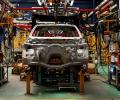
Indian auto component exporters may suffer a hit of 2,700 crore to 4,500 crore on their earnings after the imposition of steep US tariffs on key automotive parts, credit rating agency ICRA said in a note on Monday. The new 25 per cent tariff on engines, transmission, electrical components, and other auto parts may moderate the overall auto component industry's revenue growth to 6-8 per cent in 2025-26 (FY26), down from an earlier projection of 8-10 per cent.

'We have to be prepared for the larger disruption that is likely to take place.'

From Tetley Tea to Jaguar Land Rover and Air India, Ratan Tata has ticked off almost every item on his bucket list. However, one that remains unfinished is the electric version of his small car, the Tata Nano. A concept entrusted to Coimbatore-based Jayem Automotives (Jayem Auto) is still on the shelves, despite nearly 400 cars being launched, primarily due to Covid-19 and new crash norms.

The ministry stated that for vehicles designed for E10 and calibrated for E20, mileage may drop by just 1-2 per cent, while in other vehicles, it could be around 3-6 per cent.

Industry insiders in India warn that any such move in the pharmaceutical sector could be counterproductive for the US as it may face increased drug shortages if tariffs are imposed on such imports.

The automobile industry has sought government support in expediting approvals from the Chinese government for importing rare earth magnets used in various applications, including passenger cars. As per the industry sources, various domestic suppliers have already sought approval from the Chinese government through their local vendors in China.
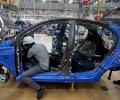
An ACMA-BCG report has targeted Indian auto component exports to hit $100 billion - nearly a fivefold increase from $21 billion currently

The deal fell through over unresolved disagreements over contentious issues, mainly on agriculture and automotive sector tariffs.

I'...additional concessions, such as opening government procurement, reducing agricultural subsidies, weakening patent protections, and allowing unrestricted data flows -- demands India has resisted for decades.'

Japan is expected to increase its investment target in India from the earlier 5 trillion yen ($34 billion) to almost 10 trillion yen.

Days after saying that there is no need for subsidies to achieve greater penetration of electric vehicles (EVs), Union Minister of Road Transport and Highways Nitin Gadkari on Monday clarified that the view is his own, but any official call on EV subsidies is not one that he can take.

With nearly 100 launches and unveils, the Bharat Mobility Global Expo 2025, held in Delhi from January 17 to 22, made one thing clear to automobile enthusiasts: Electric vehicles (EVs) are the way ahead for the Indian auto market for years to come.
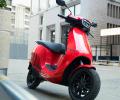
Ola Electric, India's largest electric vehicle company, has achieved a significant milestone by becoming the first two-wheeler automotive electric vehicle (EV) manufacturer in India to receive incentives under the Production Linked Incentive (PLI) Scheme for Automotive and Auto Component (PLI-Auto Scheme). The company has been granted a total incentive of Rs 73.74 crore for the Determined Sales Value of FY 2023-24 under the scheme, according to a stock exchange filing by the company.

Automobile retail sales in India rose around 5 per cent year-on-year in June with all vehicle segments, including passenger vehicles and two-wheelers, witnessing growth, Federation of Automotive Dealers Associations (FADA) said on Monday.

Cisco, a global major in networking for the Internet, is aggressively looking at the Indian automotive sector, as it opens up to exponential growth and challenges from global auto markets.

'As long as Sebi maintains transparency and market stability, the Jane Street episode is unlikely to deter long-term foreign capital.'

For UK automakers, market access to India will be limited by quantity caps and phased tariff cuts, especially on petrol, diesel and electric vehicles.

'We continue to view India as a standout within EM.'

Since October, FPIs have offloaded Indian equities worth Rs 2.1 trillion.
